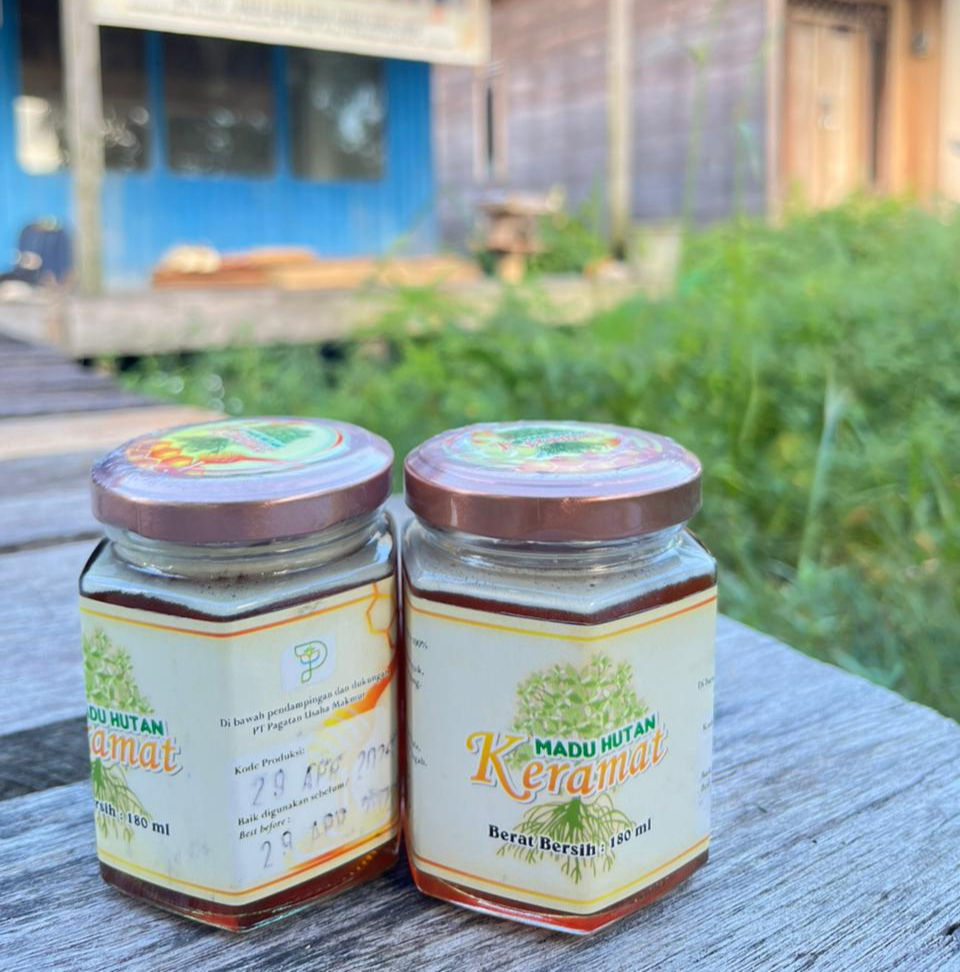
Mangrove Honey: Supporting Local Community Livelihoods

Together with local communities, we are building sustainable livelihoods that benefit people, nature, and future generations.
In the mangrove areas of the PLUM project zone, a type of stingless bee, kelulut, produces a unique honey known for its distinctive sweet-and-sour taste.
Unlike honeybees, kelulut bees have no functional stingers for defense. Instead, they protect their colonies by building nests inside tree cavities with narrow entrances that help to limit access and facilitate defense.

To support sustainable livelihoods, PLUM has been working with a local honey farmers group to increase honey production through training on artificial hive construction, improve harvesting and processing techniques, and enhance market development for this unique mangrove honey.
Until now, one forest honey producer group has been successfully established and formally registered in Kampung Keramat Village. The group comprises 12 members, including three women, who are actively involved in sustainable honey production and processing.
Stingless beekeeping offers local communities an alternative livelihood, reducing reliance on the often-unpredictable harvest of forest honey. This approach helps strengthen household incomes while promoting the conservation of surrounding ecosystems.
Over the lifetime of the project, an estimated 2,196 people are expected to benefit from improved livelihoods and income through project-supported activities such as coffee farming, forest honey production, livestock development, and other sustainable livelihood programs. Among these beneficiaries, 400 are women, highlighting the project's focus on inclusive and equitable community development.